Living in Tampa, Florida, and wanting to avoid flooding is absolutely possible—as long as you understand flood zones, elevation, and which parts of the metro are best suited for relocation buyers prioritizing peace of mind.
Understanding Flood Zones In Tampa
Before you pick a neighborhood, it helps to understand how flood risk is measured and why two streets in the same ZIP code can have very different insurance costs.
-
FEMA uses Flood Insurance Rate Maps (FIRMs) to label areas as high, moderate, or minimal flood risk based on elevation and water proximity.
-
High‑risk zones (A, AE, V, VE) are “Special Flood Hazard Areas” with at least a 1% annual chance of flooding, and most lenders require flood insurance there.
-
Minimal‑risk areas are labeled Zone X (unshaded) and are generally outside the 100‑ and 500‑year floodplains; flood insurance is often optional and typically much more affordable.
As your Realtor®, I always pull both FEMA and county flood resources for specific properties so you can see the actual risk and insurance implications, not just a color on a map.
Big Picture: Tampa’s Flood Risk
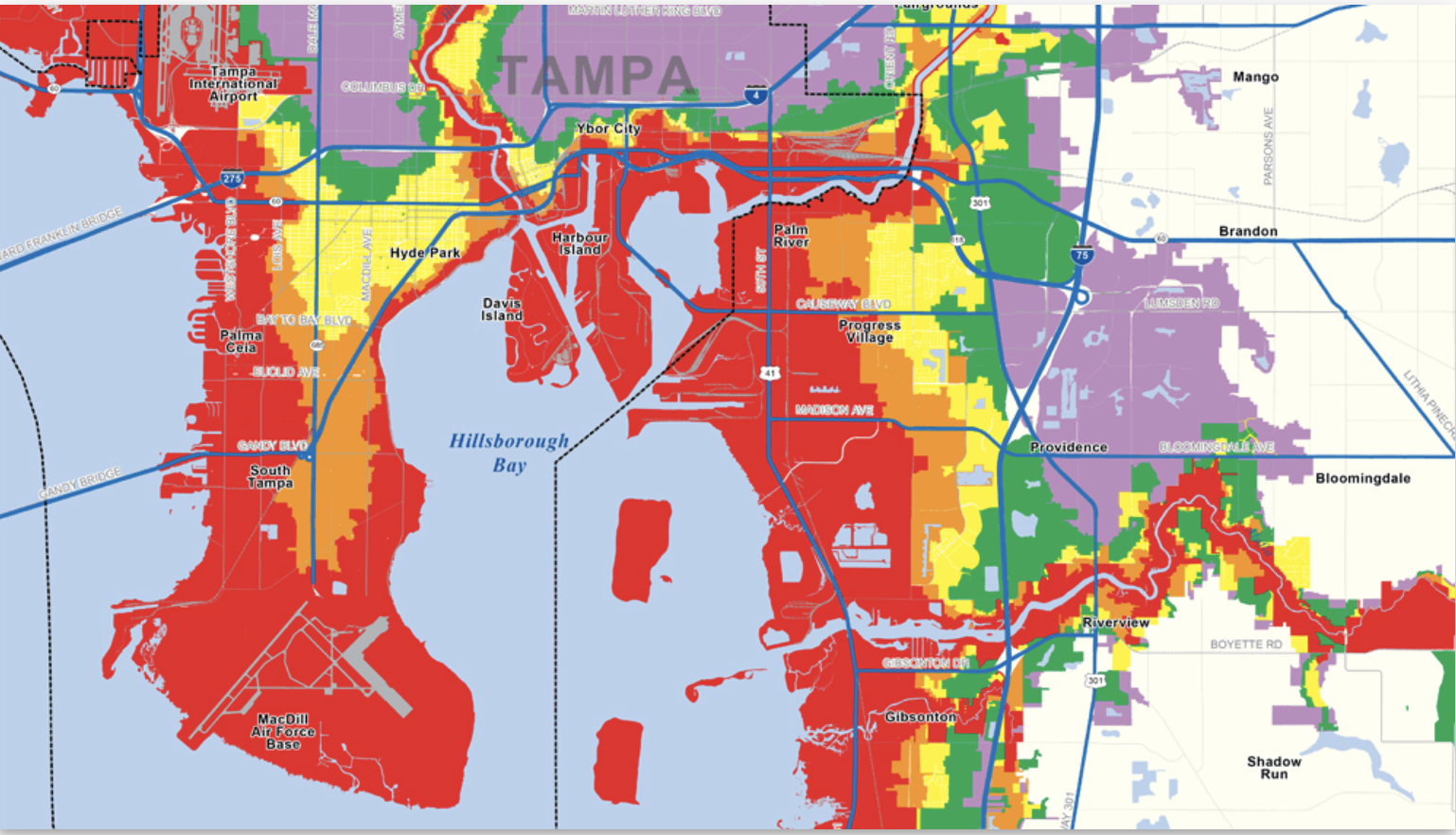
Tampa as a whole is a coastal city with a mix of high‑elevation inland areas and low‑lying waterfront zones, which is why flood research is essential for relocation buyers.
-
About 44–45% of properties in Tampa are considered at risk of flooding over the next 30 years, which makes choosing the right neighborhood especially important if you’re new to Florida.
-
Coastal and bayfront areas tend to carry higher risk and often higher insurance costs, while inland and higher‑elevation pockets of Hillsborough and nearby North Pinellas counties generally experience fewer flood issues.
When I advise buyers relocating from out of state, we look at a combination of flood zone, elevation, drainage, insurance estimates, and your long‑term plans—not just the MLS map.
Best Tampa Area Neighborhoods To Consider For Lower Flood Risk
Every home must be checked individually by address, but some parts of the Tampa metro are consistently known for being on higher ground or in predominantly Zone X areas.
Northwest Tampa & North Suburban Corridors
These communities are popular with families and relocators who want suburban amenities with generally lower flood risk than many coastal zones.
-
Westchase & Waterchase: Master‑planned communities in northwest Tampa with modern drainage, strong HOA standards, and many streets that sit outside high‑risk flood zones.
-
Citrus Park & Nine Eagles area: Suburban corridor north of Tampa International Airport with a mix of single‑family homes and townhomes, often on higher ground than South Tampa and direct bayfront areas.
-
Cheval (Lutz area): Gated golf‑course community north of Tampa with lakes, but many homes are not in Special Flood Hazard Areas and tend to see fewer flood‑insurance requirements than coastal neighborhoods.
These areas are ideal if you want newer construction, good schools, and a more “suburban Florida” feel while still staying within commuting distance to downtown Tampa and the Westshore business district.
New Tampa & North I‑75 Corridor
North and northeast Tampa feature higher‑elevation land compared to low‑lying coastal peninsulas.
-
Tampa Palms & Hunter’s Green: Planned communities in “New Tampa” with country club amenities, parks, and many streets in moderate to minimal‑risk zones, depending on the specific parcel.
-
Other New Tampa enclaves along Bruce B. Downs: A mix of single‑family, townhome, and newer construction options where flood insurance is often optional rather than lender‑required, though it’s still smart to evaluate each address.
If you’re relocating from the Midwest or Northeast and want something that feels familiar—cul‑de‑sacs, community pools, trails—this corridor is a strong starting point with generally lower flood exposure than many coastal options.
Palm Harbor, East Lake & North Pinellas Pockets
Many relocation buyers considering “Tampa Bay” broaden their search to northern Pinellas County for a blend of lifestyle and lower flood and insurance risk.
-
Palm Harbor & East Lake: Inland‑leaning pockets of North Pinellas where numerous neighborhoods are mapped in non‑flood (Zone X) areas, which can mean lower long‑term insurance costs than some beach‑adjacent zones.
-
Select 55+ and master‑planned communities: Several North Pinellas communities were developed intentionally outside Special Flood Hazard Areas, making them attractive for retirees and snowbirds who want predictability in carrying costs.
These areas still give you quick access to the Gulf beaches, Dunedin, and Clearwater while often avoiding the highest‑risk waterfront flood zones.
Great Neighborhoods With Higher Flood Risk (What To Know)
Some of Tampa Bay’s most in‑demand neighborhoods do sit in higher‑risk zones—but that doesn’t mean you should rule them out automatically if you love the lifestyle they offer.
-
South Tampa, Davis Islands, and many bayfront communities are mapped in Special Flood Hazard Areas where flood insurance is typically required by lenders and premiums can add hundreds or thousands per year to your budget.
-
Instead of avoiding these neighborhoods entirely, serious buyers often budget for insurance, look for homes with raised foundations or flood‑mitigation upgrades, and review any available elevation certificates.
If you’re relocating for a specific lifestyle—walkability, waterfront views, or proximity to downtown—we can compare both a “low‑risk inland” option and a “higher‑risk coastal” option so you can see the trade‑offs
How I Help Relocation Buyers Choose The Right Area
As a native Floridian, Tampa resident, and Realtor® who lives and breathes this market daily, I guide out‑of‑state buyers through both the lifestyle and the practical side of Florida living—especially when it comes to water, weather, and insurance.
-
I combine local flood‑zone tools (FEMA and county) with current insurance guidance so you understand total monthly carrying costs before you fall in love with a home
-
My husband and I work as a team, specializing in helping families, relocators, and investors navigate Tampa Bay, Temple Terrace, Palm Harbor, Clearwater, St. Petersburg, and Lutz—with special attention to waterfront vs. inland risk, community feel, and long‑term resale.
-
Because I’m passionate about the Florida lifestyle—yoga, tennis, and beach days included—I also help you match neighborhoods to how you actually want to live, whether that’s a golf‑course community in Cheval, a master‑planned enclave in Westchase, or a low‑risk pocket near the coast in Palm Harbor.
If you’re researching a move to Tampa and want an individualized breakdown of flood‑resilient areas that fit your budget, school needs, and lifestyle, reach out and I’ll create a custom relocation and flood‑risk map for you—down to specific neighborhoods and sample addresses.
Angie Alstott is a Tampa Bay Realtor® specializing in relocation buyers moving to Tampa, Temple Terrace, Lutz, Palm Harbor, and surrounding communities. He provides custom neighborhood and flood-risk home searches for out-of-state buyers.